Aug 17, 2026Brake Pad Knowledge
Brake Pad Materials: Ceramic vs Semi-Metallic vs NAO
Compare ceramic, semi-metallic, low-metallic and NAO brake pads to understand their differences in performance, noise, dust and applications.
Choosing the right brake pad material is not simply a matter of selecting ceramic or semi-metallic brake pads.
For distributors, importers and private-label brake pad brands, the right friction material depends on the target vehicle, driving conditions, braking performance requirements, noise expectations, dust levels and market positioning.
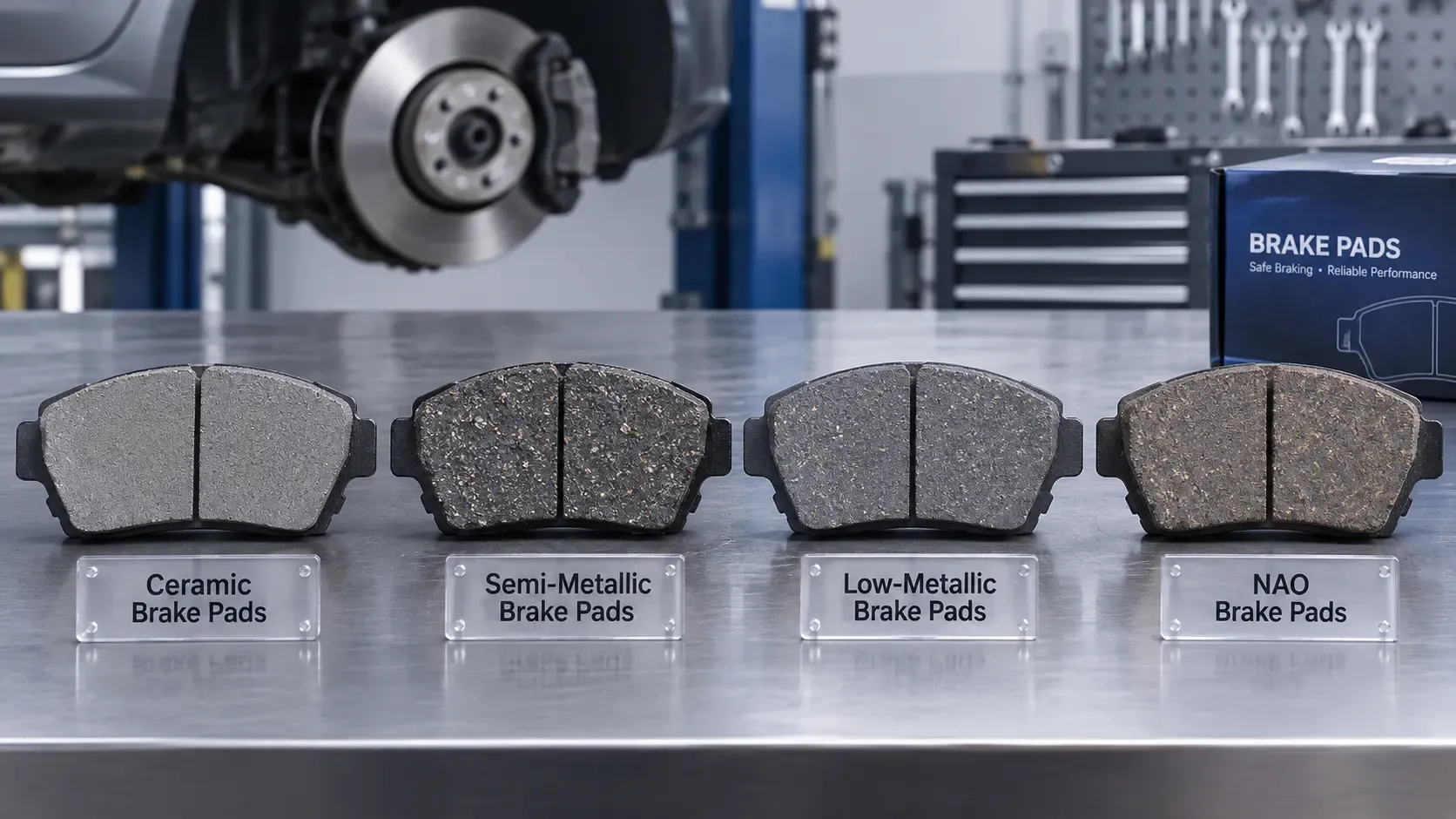
The four common brake pad material categories are:
- Ceramic
- Semi-metallic
- Low-metallic
- NAO (Non-Asbestos Organic)
Each formulation has different advantages. Understanding these differences can help buyers select the right brake pad range for their market and avoid sourcing products that do not match local driving conditions or customer expectations.
Quick Comparison of Brake Pad Materials
Brake Pad Type | Braking Performance | Noise | Dust | Heat Resistance | Typical Applications |
|---|---|---|---|---|---|
Ceramic | Stable and smooth | Low | Low | Good | Passenger cars, premium aftermarket |
Semi-Metallic | Strong | Medium | Medium-High | Excellent | SUVs, pickups, commercial vehicles |
Low-Metallic | Strong | Medium | Medium | Very Good | European vehicles, demanding road conditions |
NAO | Smooth | Low | Low-Medium | Moderate | Passenger cars, comfort-focused applications |
There is no single material that is best for every vehicle or market.
The important question for a brake pad buyer is:
Which formulation provides the right balance of braking performance, comfort, durability and cost for my target application?
1. Ceramic Brake Pads
Ceramic brake pads use ceramic fibers and other friction materials combined with fillers and bonding agents.
They are widely used in passenger car applications where drivers expect smooth braking, low noise and relatively low wheel dust.
Main Advantages
- Low braking noise
- Low visible dust
- Smooth pedal feel
- Stable friction performance
- Good service life
- Suitable for premium aftermarket positioning
Things Buyers Should Consider
Ceramic formulations are not automatically suitable for every application.
Vehicles operating under heavy loads, frequent mountain driving or demanding commercial conditions may require a formulation with stronger thermal performance.
For this reason, ceramic brake pads are particularly common in passenger cars and comfort-oriented aftermarket product lines.
2. Semi-Metallic Brake Pads
Semi-metallic brake pads contain a relatively high proportion of metallic components combined with friction modifiers, fillers and resin.
Their main advantage is strong braking performance and good heat dissipation.
Main Advantages
- Strong braking response
- Excellent heat resistance
- Good performance under repeated braking
- Suitable for heavier vehicles
- Reliable performance under demanding conditions
Things Buyers Should Consider
Compared with ceramic or some NAO formulations, semi-metallic brake pads may produce more noise and visible dust.
However, for markets where braking performance, durability and thermal stability are more important than extremely low dust, semi-metallic formulations remain an important choice.
Typical applications include:
- SUVs
- Pickup trucks
- Light commercial vehicles
- Trucks
- Heavy-duty applications
3. Low-Metallic Brake Pads
Low-metallic brake pads combine organic friction materials with a smaller percentage of metallic components.
They are designed to achieve a balance between braking performance and driving comfort.
Main Advantages
- Strong initial bite
- Good heat transfer
- Stable braking performance
- Suitable for higher-speed driving
- Good balance between comfort and performance
Low-metallic formulations are commonly found in European vehicle applications and markets where stronger braking response is preferred.
Things Buyers Should Consider
The metallic content can result in more dust or noise compared with some ceramic formulations.
However, formulation design has a major influence on actual performance.
Two low-metallic brake pads can perform very differently depending on the friction recipe, raw materials and manufacturing process.
4. NAO Brake Pads
NAO stands for Non-Asbestos Organic.
These brake pads typically use organic fibers, fillers, friction modifiers and resins without asbestos.
NAO formulations are generally designed for smooth and quiet braking.
Main Advantages
- Low noise
- Smooth braking characteristics
- Good driving comfort
- Relatively low rotor wear
- Suitable for many passenger car applications
Things Buyers Should Consider
Traditional NAO formulations may have lower thermal resistance than semi-metallic formulations.
For normal passenger car use this may not be a problem, but demanding applications require careful formulation selection.
This is why buyers should not evaluate a brake pad only by whether it is labeled "NAO."
The actual friction formulation matters much more.
Ceramic vs Semi-Metallic Brake Pads
This is one of the most common comparisons in the aftermarket.
Ceramic brake pads are generally preferred when the priority is:
- Low noise
- Low dust
- Comfortable braking
- Passenger car applications
- Premium aftermarket positioning
Semi-metallic brake pads are generally preferred when the priority is:
- Strong braking performance
- High-temperature resistance
- Heavy vehicle applications
- Repeated braking
- Demanding operating conditions
Neither material is universally better.
The correct choice depends on the vehicle and the market.
Low-Metallic vs NAO Brake Pads
Low-metallic brake pads generally provide stronger braking response and better thermal performance.
NAO brake pads generally focus more on quiet operation and driving comfort.
For distributors selling into multiple markets, it may therefore be necessary to use different formulations even for similar vehicle categories.
Climate, road conditions, driving habits and customer expectations can all influence the appropriate formulation.
Why Brake Pad Formulation Matters for B2B Buyers
For a distributor, brake pad material affects much more than braking performance.
It can influence:
- Customer complaints
- Brake noise
- Wheel dust
- Pad wear
- Rotor wear
- Product positioning
- Warranty claims
- Repeat orders
A formulation that performs well in one market may generate complaints in another.
For example, a buyer serving urban passenger cars may prioritize low noise and low dust.
A distributor supplying pickups or commercial vehicles may care more about thermal stability and braking strength.
This is why professional brake pad sourcing should start with the application rather than simply asking for the cheapest available formulation.
What Should You Tell Your Brake Pad Manufacturer?
When requesting a quotation or developing a private-label brake pad range, provide as much application information as possible.
Useful information includes:
- Target country or market
- Vehicle applications
- OE or aftermarket reference numbers
- Preferred friction material
- Expected price level
- Driving conditions
- Noise requirements
- Dust requirements
- Packaging requirements
- Certification or testing requirements
If you are unsure about the formulation, an experienced brake pad manufacturer should be able to recommend suitable options based on your target market.
Can the Same Brake Pad Shape Use Different Formulations?
Yes.
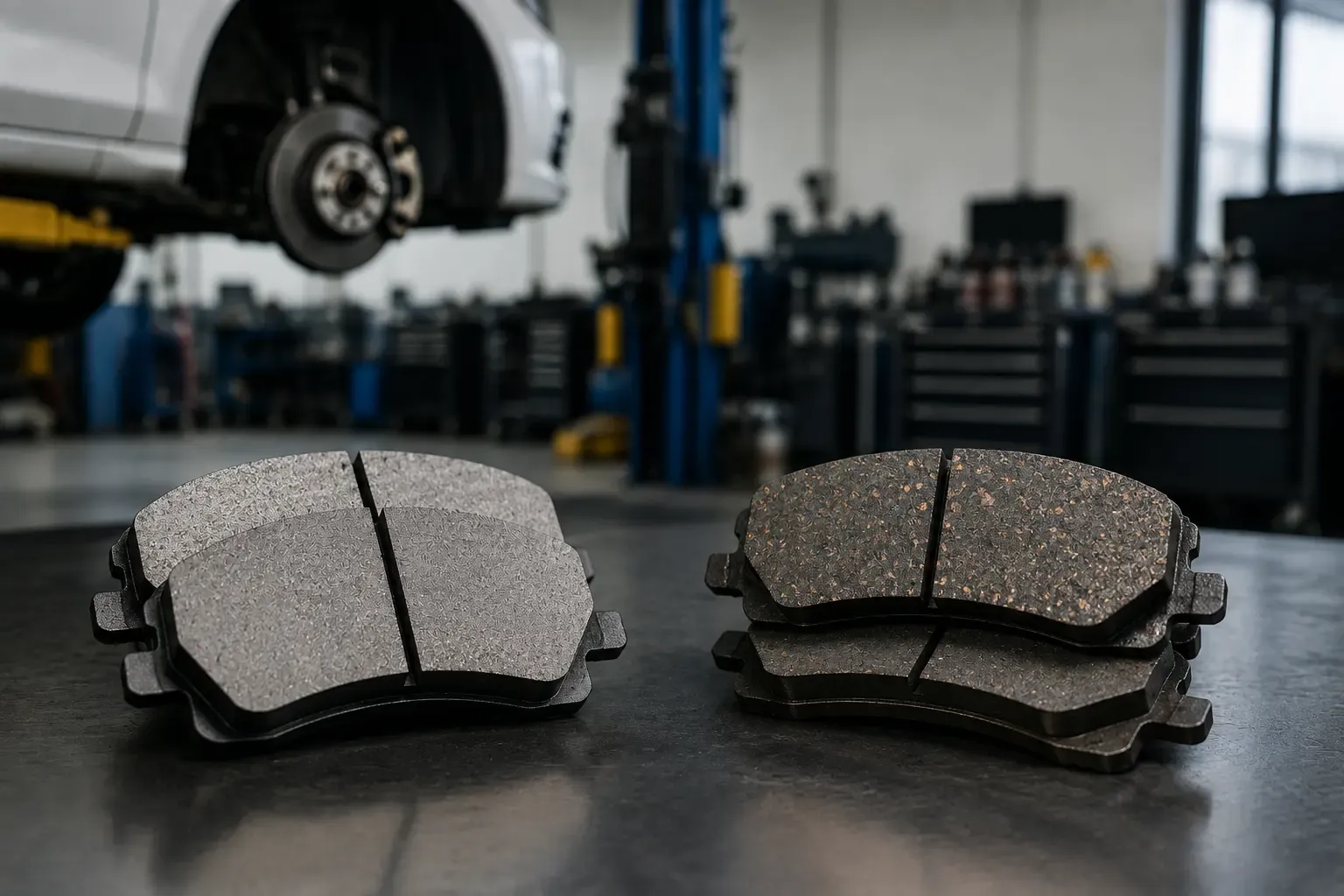
The same brake pad reference can often be produced with different friction formulations.
For example, depending on the application and buyer requirements, one brake pad shape may be available in:
- Ceramic
- Semi-metallic
- Low-metallic
- NAO
This gives distributors and private-label brands more flexibility when building product ranges for different price segments or markets.
However, formulation selection should always consider the actual vehicle application and required performance.
How Xinzhong Brake Supports Different Market Requirements
Xinzhong Brake manufactures brake pads for passenger cars, SUVs, light trucks and commercial vehicle applications.
Our friction material capabilities include ceramic, semi-metallic, low-metallic and NAO formulations.
With more than 200 friction formulations and thousands of brake pad references, we can recommend different material solutions according to vehicle application, target market and customer positioning.
For OEM and private-label projects, formulation, packaging and product specifications can also be discussed according to buyer requirements.
Conclusion
Ceramic, semi-metallic, low-metallic and NAO brake pads all have their own advantages.
The right material depends on the vehicle, operating conditions and expectations of the target market.
For B2B buyers, the goal should not be to find one "best" brake pad material.
The goal is to match the right friction formulation with the right application and market.
If you are sourcing brake pads for distribution, wholesale or private-label projects, send us your required brake pad references and target market. Our team can help evaluate suitable friction material options for your product range.
FAQ
Which brake pad material is best?
There is no single best brake pad material. Ceramic is often preferred for low noise and dust, while semi-metallic and low-metallic formulations can provide stronger thermal and braking performance. The correct choice depends on the application.
Are ceramic brake pads better than semi-metallic brake pads?
Not necessarily. Ceramic brake pads generally offer better comfort and lower dust, while semi-metallic pads are often better suited to demanding braking conditions and heavier vehicles.
What does NAO mean in brake pads?
NAO means Non-Asbestos Organic. These brake pads use organic fibers and other friction materials without asbestos and are commonly designed for smooth, quiet braking.
Can a brake pad manufacturer customize the friction material?
Yes. Experienced brake pad manufacturers can offer different friction formulations according to vehicle applications, market requirements, performance targets and customer positioning.
Which brake pad material is suitable for private-label brands?
It depends on the target market. Private-label brands may use ceramic formulations for premium passenger car ranges and semi-metallic or low-metallic formulations for more demanding applications.