OEM & Manufacturing Insights
How to Handle Brake Pad Quality Claims: A Guide for Importers and Distributors
Learn how brake pad importers and distributors should handle quality complaints, collect technical evidence, investigate root causes and work with manufacturers on corrective actions.
How to Handle Brake Pad Quality Claims: A Guide for Importers and Distributors
For brake pad importers and distributors, product quality is not only about what happens before shipment. It is also about how problems are investigated and resolved after products reach the market.
A customer may report brake noise, vibration, unusual wear, reduced braking performance or other concerns. When this happens, the distributor needs to respond quickly, collect reliable information and work with the manufacturer to identify the cause.
Not every brake complaint is caused by a defective brake pad. Vehicle condition, installation procedures, brake disc condition and operating environments can all influence braking performance.
This guide explains how distributors can manage brake pad quality claims professionally, reduce unnecessary disputes and build stronger long-term relationships with their suppliers.
1. Why After-Sales Support Matters in Brake Pad Sourcing
When selecting a brake pad manufacturer, importers often focus on price, friction material, product coverage, MOQ and delivery time.
However, after-sales support deserves equal attention.
Brake pads are safety-critical automotive components. An unresolved complaint can affect customer confidence, workshop relationships and the distributor's reputation.
A reliable supplier should be willing to review technical evidence, investigate potential product defects and communicate clearly about corrective actions.
For distributors developing their own private-label brands, this becomes particularly important. End customers may associate product problems with the distributor's brand rather than the original manufacturer.
The goal of a quality claim process should not simply be to decide who pays for a replacement. It should be to understand what happened, protect customers and prevent similar problems.
2. Common Brake Pad Complaints in the Aftermarket
Different complaints require different investigation methods.
Brake Noise
Squealing, squeaking or other unusual noises are among the most frequently reported brake concerns.
Possible contributing factors include:
- Friction material characteristics
- Brake disc surface condition
- Incorrect or missing installation hardware
- Caliper or sliding pin problems
- Improper bedding-in procedures
- Vibration within the brake assembly
Brake noise alone does not automatically prove a manufacturing defect.
The manufacturer and distributor should examine the application, installation conditions and available technical evidence before determining the cause.
Excessive Brake Dust
Some customers may complain that brake pads produce more visible dust than expected.
Dust generation can be influenced by friction material formulation, operating conditions and the interaction between the brake pad and disc.
Importers should establish realistic performance expectations for different product lines rather than assuming that all brake pads will produce the same amount of dust.
Uneven or Premature Wear
Unusual wear patterns may indicate several possible problems, including:
- Incorrect fitment
- Caliper movement restrictions
- Brake disc irregularities
- Installation issues
- Operating conditions
- Friction material or manufacturing problems
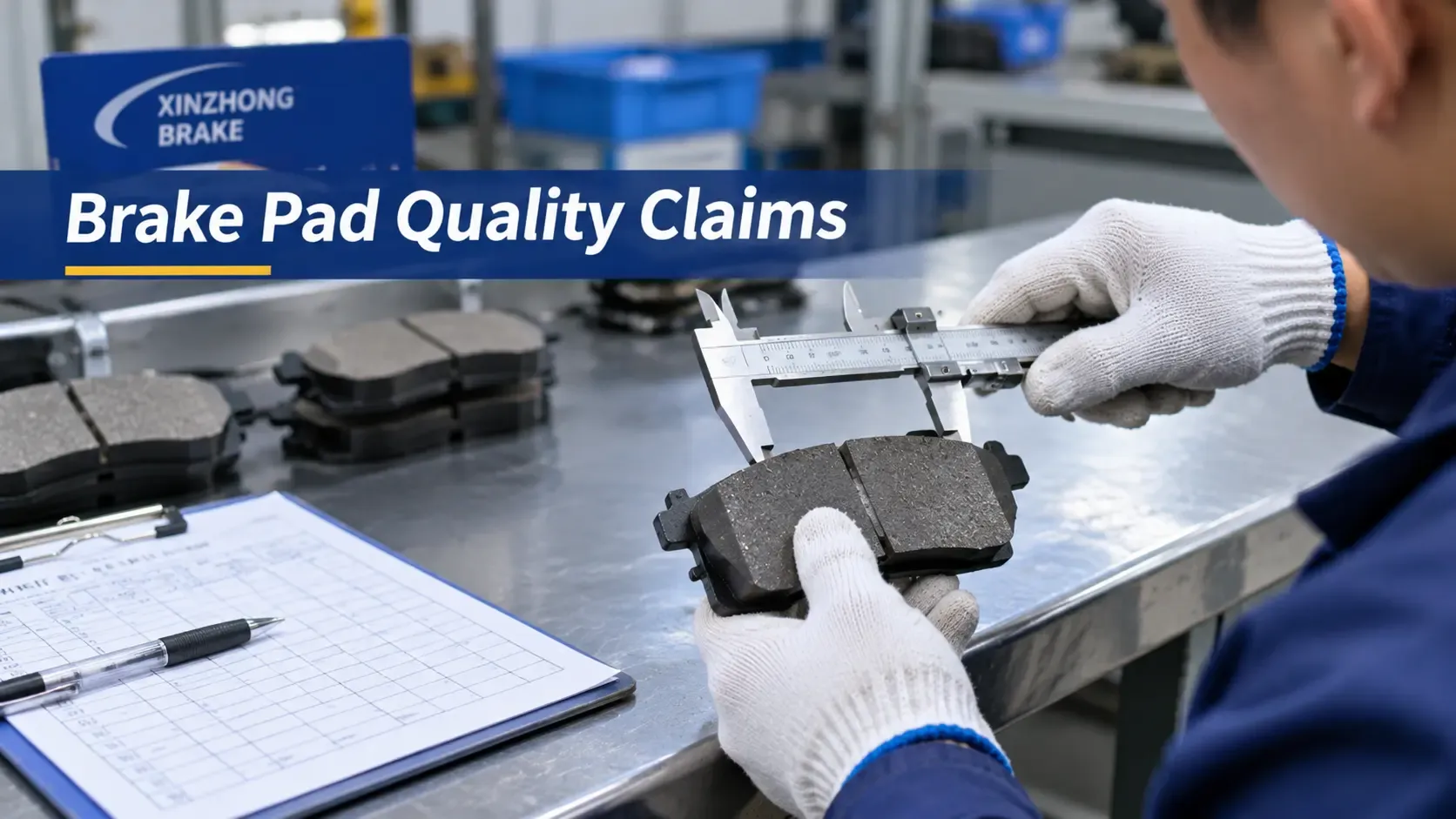
A useful investigation should include photographs of both the inner and outer pads, their remaining thickness and the corresponding brake disc condition.
Brake Vibration or Judder
Vibration during braking may be associated with brake disc thickness variation, disc runout, uneven friction material transfer or other brake system conditions.
A complete inspection is needed before attributing vibration to the brake pads.
Reduced Braking Performance
Any report involving unexpectedly poor braking performance should be treated as a potential safety concern.
The vehicle should be inspected by a qualified technician, and potentially unsafe components should not remain in service while the issue is being assessed.
If evidence suggests a broader product safety problem, the distributor and manufacturer should promptly evaluate affected batches and any applicable reporting or corrective-action obligations.
3. What Information Should Distributors Collect?
One of the biggest challenges in handling brake pad complaints is incomplete information.
A message saying "your brake pads are noisy" does not provide enough detail for a meaningful technical investigation.
Distributors should establish a standard claim-reporting process.
Required Information | Purpose |
|---|---|
Brake pad reference number | Identifies the product |
Order or invoice number | Connects the complaint to a shipment |
Batch or production code | Supports traceability |
Vehicle make, model and year | Helps verify application |
Front or rear installation | Identifies the brake position |
Mileage since installation | Provides operating context |
Description of the complaint | Clarifies the reported symptoms |
Photos or videos | Supports technical assessment |
Brake disc and caliper condition | Helps identify system-related causes |
Workshop inspection findings | Provides additional diagnostic evidence |
Where available, distributors should also retain the affected brake pads for further examination.
For serious safety-related complaints, evidence collection should not delay necessary action to protect customers.
Accurate product identification is particularly important when a complaint involves possible fitment errors. For more information on matching part numbers and verifying applications, see our Brake Pad Cross Reference Guide: FMSI, WVA & OE Numbers.
4. How Manufacturers Investigate Brake Pad Quality Claims
A structured investigation generally follows several stages.
Step 1: Confirm Product Identification
The manufacturer first needs to establish which product was supplied.
This may involve reviewing the reference number, packaging information, batch code and production records.
Accurate traceability helps determine whether the complaint concerns an individual set or could involve other products from the same production batch.
Step 2: Verify Vehicle Application
The next step is to confirm whether the brake pads were suitable for the vehicle.
The investigation may compare:
- OE reference numbers
- FMSI or WVA references, where applicable
- Brake pad dimensions
- Hardware and wear indicator configurations
- Vehicle model and production specifications
Incorrect application can cause problems even when the brake pads themselves were manufactured correctly.
Step 3: Review Installation and Operating Conditions
The manufacturer may request additional information about installation procedures, brake disc condition, caliper operation and driving conditions.
This does not mean the manufacturer is automatically rejecting responsibility.
It is part of determining whether the issue originated from the product, the installation or another part of the braking system.
Step 4: Examine the Product
When sufficient evidence is available, the manufacturer may inspect returned components, review retained production samples or conduct appropriate technical tests.
Depending on the complaint, the investigation may involve dimensional inspection, friction material assessment, bonding examination or other relevant checks.
The investigation method should match the reported failure.
For a closer look at the technical checks used during manufacturing, read our guide to Brake Pad Testing & Quality Control for Importers.
Step 5: Determine Corrective Actions
If a manufacturing-related defect is confirmed, appropriate actions may include:
- Replacing affected products
- Issuing an agreed credit or other commercial remedy
- Reviewing production or inspection procedures
- Investigating other products from the same batch
- Implementing corrective and preventive actions
The specific remedy depends on the investigation findings, contractual terms and applicable legal requirements.
For potential safety defects, commercial compensation alone may not be sufficient.
5. Why Batch Traceability Is Important
Imagine a distributor receives a complaint about one brake pad set.
Without reliable product identification, the manufacturer may struggle to determine when the product was made, which materials were used or whether other products could be affected.
Batch traceability helps connect finished products with relevant production and quality records.
For importers, this can make investigations more efficient and reduce uncertainty.
Before selecting a supplier, consider asking:
- How are production batches identified?
- Can a complaint be traced to relevant manufacturing records?
- Are inspection records retained?
- How are recurring complaints monitored?
- What happens when multiple complaints involve the same batch?
A clear traceability system is especially valuable for distributors handling multiple references and private-label product lines.
6. How to Agree on Warranty and Claim Procedures Before Ordering
Many after-sales disputes arise because expectations were never clearly established.
Before placing a commercial order, importers and manufacturers should discuss how product complaints will be handled.
Important points include:
Claim submission: What information and evidence must the distributor provide?
Investigation process: Who reviews the complaint, and what technical information may be required?
Response expectations: When should the supplier acknowledge a complaint and provide investigation updates?
Product returns: Under what circumstances are physical samples required?
Commercial remedies: How will confirmed manufacturing defects be addressed?
Safety escalation: How will potentially serious or recurring safety issues be handled?
These arrangements should be documented rather than relying entirely on informal conversations.
A warranty statement should also distinguish manufacturing defects from problems caused by incorrect application, installation or unrelated vehicle conditions, while respecting applicable consumer protection and product safety laws.
After-sales support is also an important factor when choosing a long-term manufacturing partner. Our article on How to Evaluate a Brake Pad Supplier: 10 Questions Importers Should Ask covers additional questions buyers should consider before placing bulk orders.
7. How to Reduce Quality Complaints Before Shipment
A good after-sales process starts before the goods leave the factory.
Importers can reduce avoidable problems by taking several practical steps.
Confirm References Carefully
Verify OE numbers, dimensions and vehicle applications before approving an order.
Avoid treating unverified cross-reference information as confirmed fitment.
Evaluate Samples
For new product lines, conduct appropriate sample evaluation before committing to larger quantities.
Where practical, include local workshop feedback and representative operating conditions.
Our practical guide, Brake Pad Samples: What Distributors Should Test Before Placing a Bulk Order, explains how to evaluate product identification, dimensions, construction and braking performance before approving production.
Agree on Product Requirements
Discuss the intended application, friction material, performance expectations, packaging and any required market-specific compliance.
Maintain Clear Order Records
Keep approved quotations, specifications, sample confirmations and relevant correspondence.
These records can be valuable if questions arise later.
Monitor Early Market Feedback
For a new private-label brake pad range, review customer feedback from the first shipments.
Repeated complaints involving the same reference or symptom deserve closer investigation.
8. Working With XINZHONG BRAKE on After-Sales Issues
At XINZHONG BRAKE, we believe that a long-term manufacturing partnership should include clear communication before and after shipment.
As a brake pad manufacturer operating under an IATF 16949 quality management system, we understand the importance of production control, product consistency and traceability.
When customers report a potential quality issue, we ask for relevant information such as product references, photographs, application details and order records so that the concern can be reviewed.
Where a manufacturing-related quality problem is confirmed, we work with customers to arrange an appropriate resolution, including replacement of affected products where agreed.
We also recognize that brake performance can be influenced by multiple components and operating conditions. Technical investigation is therefore important before reaching conclusions.
Our objective is to support distributors in building reliable aftermarket brake pad product lines and maintaining confidence in their own markets.
Frequently Asked Questions
Does brake noise always mean the brake pads are defective?
No. Brake noise can result from friction material characteristics, installation hardware, brake disc condition, caliper problems or other factors. The cause should be investigated before determining responsibility.
What should I do if several customers report the same problem?
Record the complaints, identify the affected references and batches, and notify the manufacturer promptly. If the reports suggest a potential safety defect, take appropriate precautions and assess whether further corrective action is required.
Should distributors return every complained-about brake pad?
Not necessarily. Some investigations can begin with photographs, videos and technical records. However, physical samples may be necessary for more detailed examination.
Can a manufacturer replace products with confirmed manufacturing defects?
Replacement is one possible remedy. The appropriate resolution depends on the findings, agreed warranty terms and applicable legal requirements.
How can private-label distributors protect their brand reputation?
Choose suppliers with clear quality management processes, verify applications, retain product traceability information and establish complaint-handling procedures before commercial orders begin.
Conclusion: A Good Supplier Helps Solve Problems
Brake pad quality complaints are not simply commercial disagreements. They are opportunities to identify problems, improve processes and protect customers.
For overseas distributors, a reliable manufacturing partner should offer more than competitive prices and product catalogs.
Clear technical communication, reasonable investigation procedures and appropriate corrective actions are essential parts of a sustainable supply relationship.
Before placing your next brake pad order, ask your supplier how quality complaints are investigated and resolved.
The answer may tell you as much about the manufacturer as the quotation itself.
Discuss Your Brake Pad Sourcing Project
Looking for a brake pad manufacturer that supports OEM/private-label production and long-term distributor partnerships?
Share your target references, market requirements and estimated order quantities with XINZHONG BRAKE.