Industry Trends & Market Insights
Sourcing Brake Pads for Chinese Car Brands: A Guide for Overseas Distributors
Learn how overseas distributors can source brake pads for BYD, Chery, Geely, GWM and other Chinese car brands. Explore fitment verification, OE matching, inventory planning and OEM supply.
Sourcing Brake Pads for Chinese Car Brands: A Guide for Overseas Distributors
Chinese automotive brands such as BYD, Chery, Jetour, Geely, GWM, Haval and Changan are reaching more international markets. For aftermarket distributors, this creates an opportunity to develop replacement brake pad product lines for a changing vehicle population.
However, sourcing brake pads for Chinese vehicles is not simply a matter of selecting a brand and requesting a price list. Model names, production years, regional specifications and brake system configurations must be checked before placing an order.
This guide explains how overseas importers and distributors can approach Chinese-brand brake pad sourcing with greater accuracy and lower inventory risk.
1. Why Chinese Vehicle Aftermarket Demand Deserves Attention
As more Chinese vehicles enter international markets, distributors need to understand which replacement parts local workshops will require over time.
For example, Chery Group reported more than 1.34 million vehicle exports in 2025, while Geely Auto reported approximately 420,000 overseas vehicle sales during the same year. These figures demonstrate the international presence of Chinese vehicle manufacturers, although replacement-parts demand varies considerably by country and model.
For brake pad importers, the key question is not which Chinese brand is the largest globally. It is which specific models are already operating in the distributor's local market and beginning to require replacement parts.
2. Which Chinese Car Brands Should Distributors Research?
Depending on the target market, distributors may wish to investigate vehicles from the following brands:
- Chery, Omoda, Jaecoo and Jetour: Research locally sold SUV and passenger-car models.
- Geely: Check model names, production years and local vehicle specifications.
- BYD: Identify the exact electric or hybrid vehicle model and brake system configuration.
- GWM and Haval: Review the local SUV and pickup population.
- Changan, MG and JAC: Assess local vehicle registrations and workshop demand before selecting stock.
This is a research starting point, not a universal sales ranking. The most suitable brands for inventory depend on the vehicles actually sold and serviced in each country.
3. Why Vehicle Names Alone Are Not Enough
One of the most common sourcing mistakes is assuming that every vehicle with the same model name uses identical brake pads.
Brake pad fitment can vary because of:
- Different production years or model generations
- Regional vehicle specifications
- Engine, drivetrain or trim configurations
- Different front and rear brake systems
- Changes in brake calipers or original equipment suppliers
Therefore, a request such as "brake pads for Chery Tiggo" is usually insufficient for accurate quotation or production.
A more useful inquiry includes the exact model, production year, market, front or rear position and any available OE reference number.
4. How to Verify Brake Pad Compatibility
Before confirming an aftermarket brake pad reference, importers should collect as much reliable technical information as possible.
Information | Why It Matters |
|---|---|
Vehicle brand and model | Identifies the vehicle family |
Production year | Helps distinguish generations and revisions |
Destination market | Helps identify possible regional differences |
Front or rear position | Prevents confusion between brake assemblies |
OE part number | Provides a useful original-part reference |
FMSI or WVA reference | Supports aftermarket cross-reference checking where available |
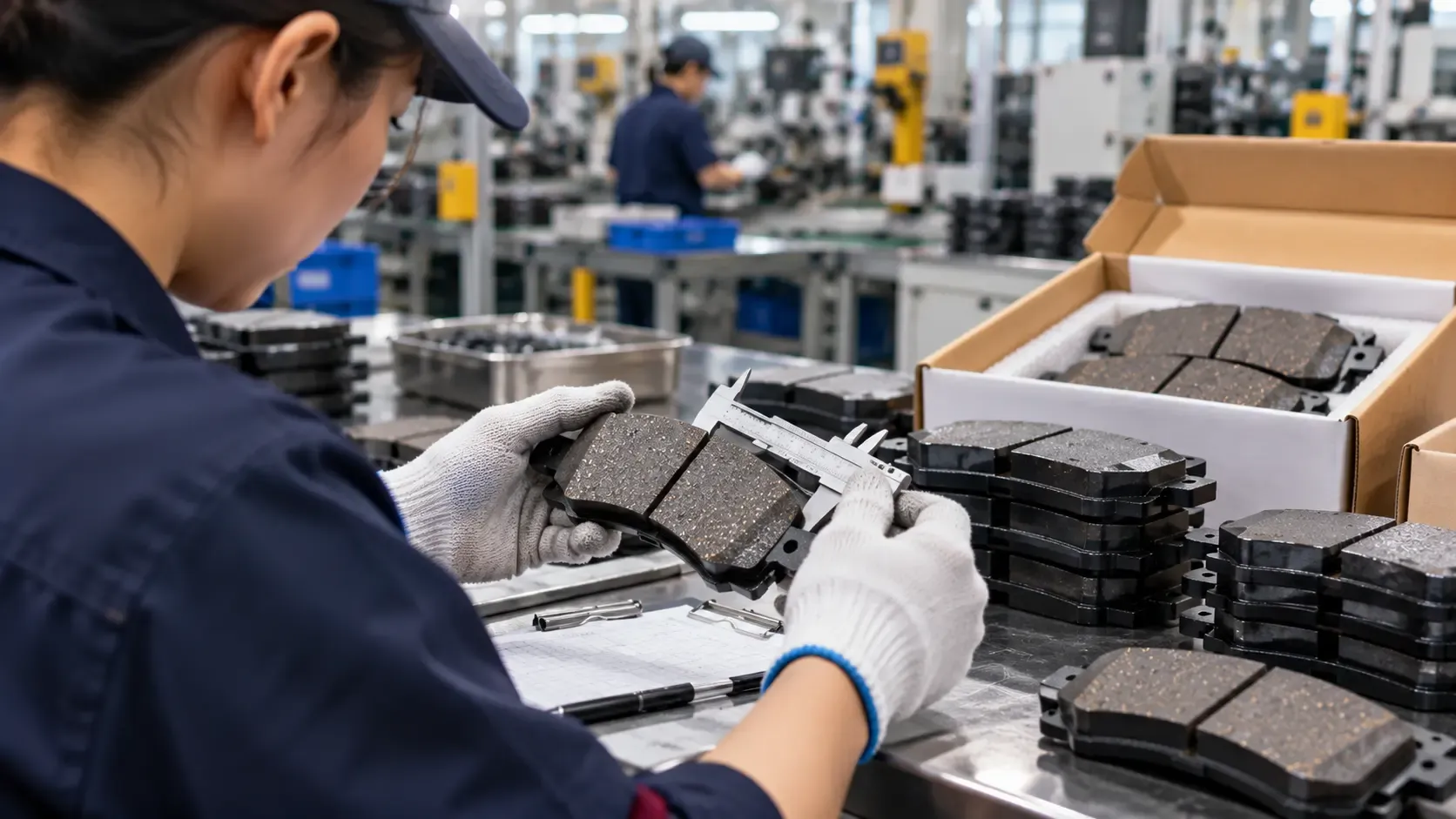
Brake pad photos and dimensions | Helps verify shape and physical characteristics |
OE, FMSI and WVA references are useful tools, but a matching number alone should not be treated as final proof of compatibility. Critical dimensions, hardware, wear indicators and application details may also need verification.
When uncertainty remains, request additional technical information or a physical sample before approving a bulk order.
5. How to Build a Practical Initial Inventory
For distributors entering the Chinese-vehicle aftermarket, buying every available reference is rarely the best starting strategy.
Instead, consider the following approach:
- Identify locally common models. Ask workshops, vehicle dealers and spare-parts retailers which Chinese vehicles they service most frequently.
- Separate confirmed demand from assumptions. Record actual inquiries and vehicle applications rather than relying only on brand popularity.
- Verify brake pad references. Confirm OE numbers and technical dimensions before placing an order.
- Start with selected references. Prioritize models with repeatable demand rather than purchasing a broad, untested range.
- Expand using sales feedback. Track workshop requests, sell-through and fitment issues to improve future purchasing decisions.
This approach can help reduce slow-moving inventory and the cost of incorrect applications.
6. Choosing Brake Pad Materials for the Local Market
Brake pad material selection should reflect the vehicle application, performance requirements and target customer segment.
Depending on the application and verified technical requirements, distributors may consider semi-metallic, ceramic or low-metallic formulations.
However, material names alone do not determine product quality. Friction performance, temperature behavior, noise, dust, durability and compatibility with the braking system should be evaluated together.
For electric and hybrid vehicles, particular attention should be paid to the manufacturer's brake system requirements and the interaction between regenerative and friction braking. A brake pad should not be assumed suitable for an EV merely because it fits physically.
7. What to Ask a Chinese Brake Pad Manufacturer
Before placing an order for Chinese-brand applications, overseas buyers should ask:
- Which requested references are already available with verified application data?
- Can the supplier provide dimensions, photos and cross-reference information?
- Which references require additional fitment confirmation or new tooling?
- What friction material options are suitable for the specified application?
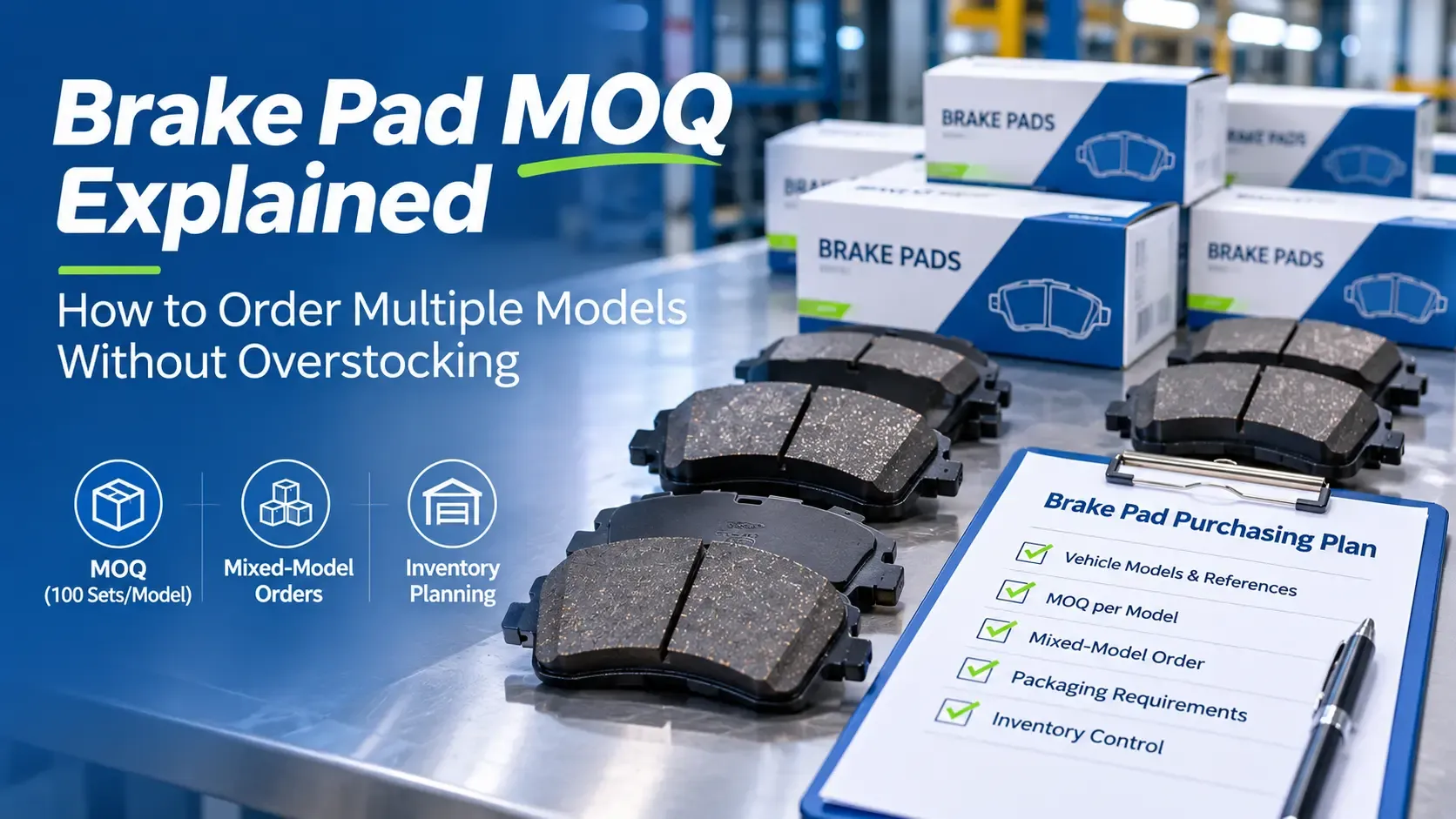
- What are the MOQ and lead time for each reference?
- Can different confirmed references be combined into one shipment?
- Are samples available for technical and local-market evaluation?
- What quality documentation and after-sales procedures are provided?
A reliable sourcing process should clearly distinguish confirmed applications from references that still require technical review.
8. Working With XINZHONG BRAKE
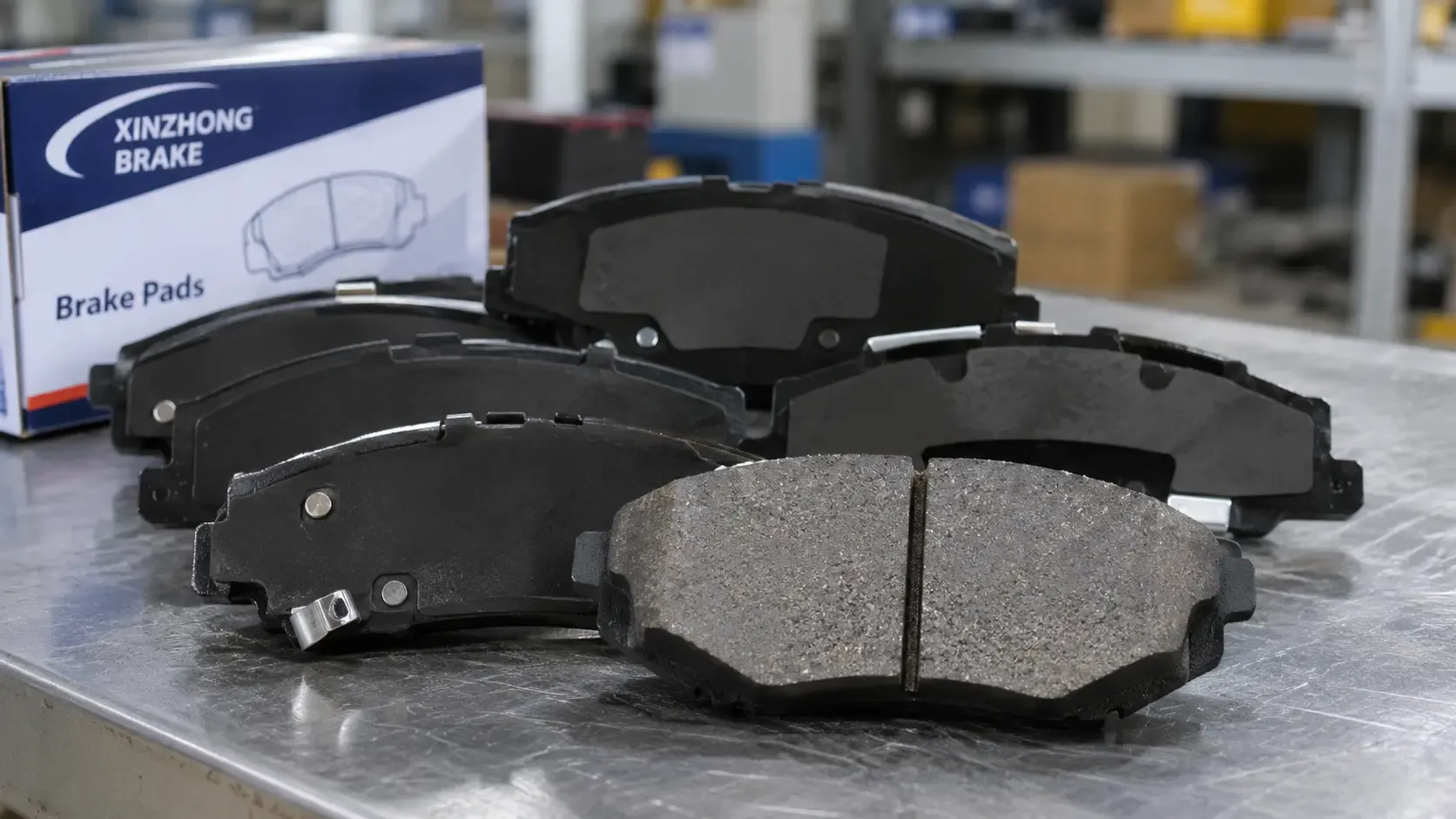
XINZHONG BRAKE manufactures aftermarket brake pads and supports overseas distributors with product selection, OEM/private-label packaging and application verification.
For Chinese-brand vehicle projects, buyers can send their target vehicle list, OE numbers or available brake pad references. Our team can review the information against available product data and identify which applications can be quoted or require further confirmation.
Where applicable, we can discuss material options, samples, minimum order quantities and customized packaging based on the specific project.
We do not recommend ordering unverified references solely on the basis of a vehicle brand or model name.
Frequently Asked Questions
Can I order brake pads for several Chinese car brands in one shipment?
Mixed-reference orders may be possible, depending on the models, production availability and minimum order requirements. Confirm the quantity and lead time for each reference with the manufacturer.
Are brake pads interchangeable between different Chinese vehicle models?
Some applications may share compatible brake pad references, but interchangeability must be verified using reliable application data and technical specifications. Never assume two models use the same pads based on visual similarity alone.
What if I do not have an OE number?
Provide the exact vehicle model, year, market, front or rear position and clear photographs of the existing brake pads if available. Additional measurements or technical references may be needed.
Should I purchase a full Chinese-brand brake pad catalog immediately?
For a new market or product line, a targeted initial selection is usually more practical. Start with verified applications supported by local workshop demand and expand as sales data becomes available.
Start With the Right References
Successful brake pad sourcing for Chinese car brands starts with accurate application information and realistic local demand.
If you are developing an aftermarket brake pad range for BYD, Chery, Geely, GWM, Haval, Changan or other Chinese vehicles, send us your target models and available OE references. We can help review the applications before quotation.
Source Brake Pads With XINZHONG BRAKE
Share your target vehicle models, OE numbers and estimated quantities to discuss application verification, samples and OEM supply.