Sep 14, 2026OEM & Manufacturing Insights
Brake Pad Private Label Packaging: What Distributors Need to Prepare
Planning private label brake pads? Learn what distributors should prepare for custom packaging, labels, barcodes, artwork, MOQ and multi-reference orders.
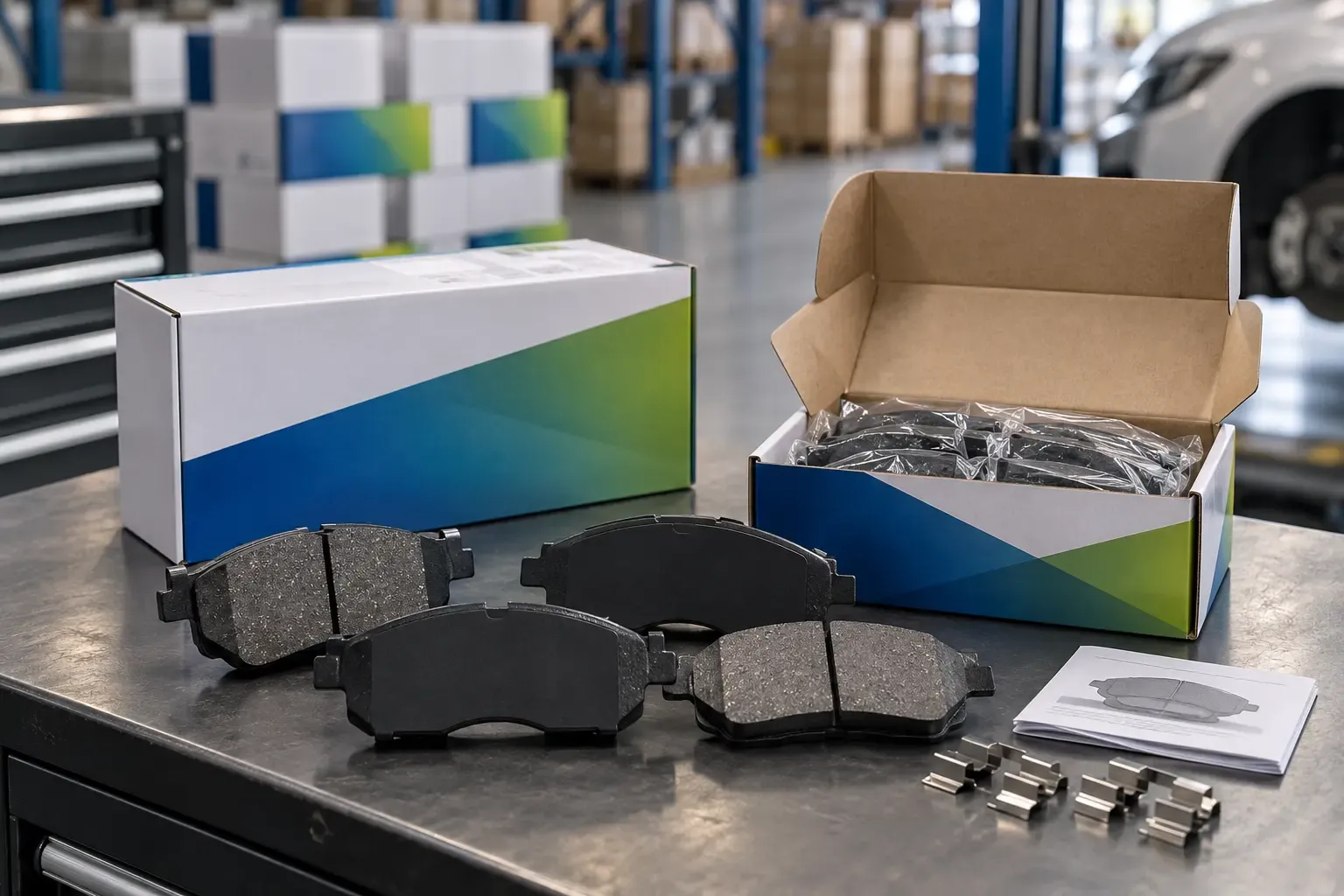
For distributors and importers, packaging must work across dozens or even hundreds of brake pad references while keeping product identification, warehouse handling and brand presentation consistent.
Before starting a private label brake pad order, several packaging details should therefore be confirmed with the manufacturer.
This guide explains what buyers should prepare and what should be discussed before mass production.
What Does Private Label Brake Pad Packaging Include?
Private label packaging usually involves more than the outer box.
Depending on the project, it may include:
- Custom printed brake pad boxes
- Brand logo and visual identity
- Product labels
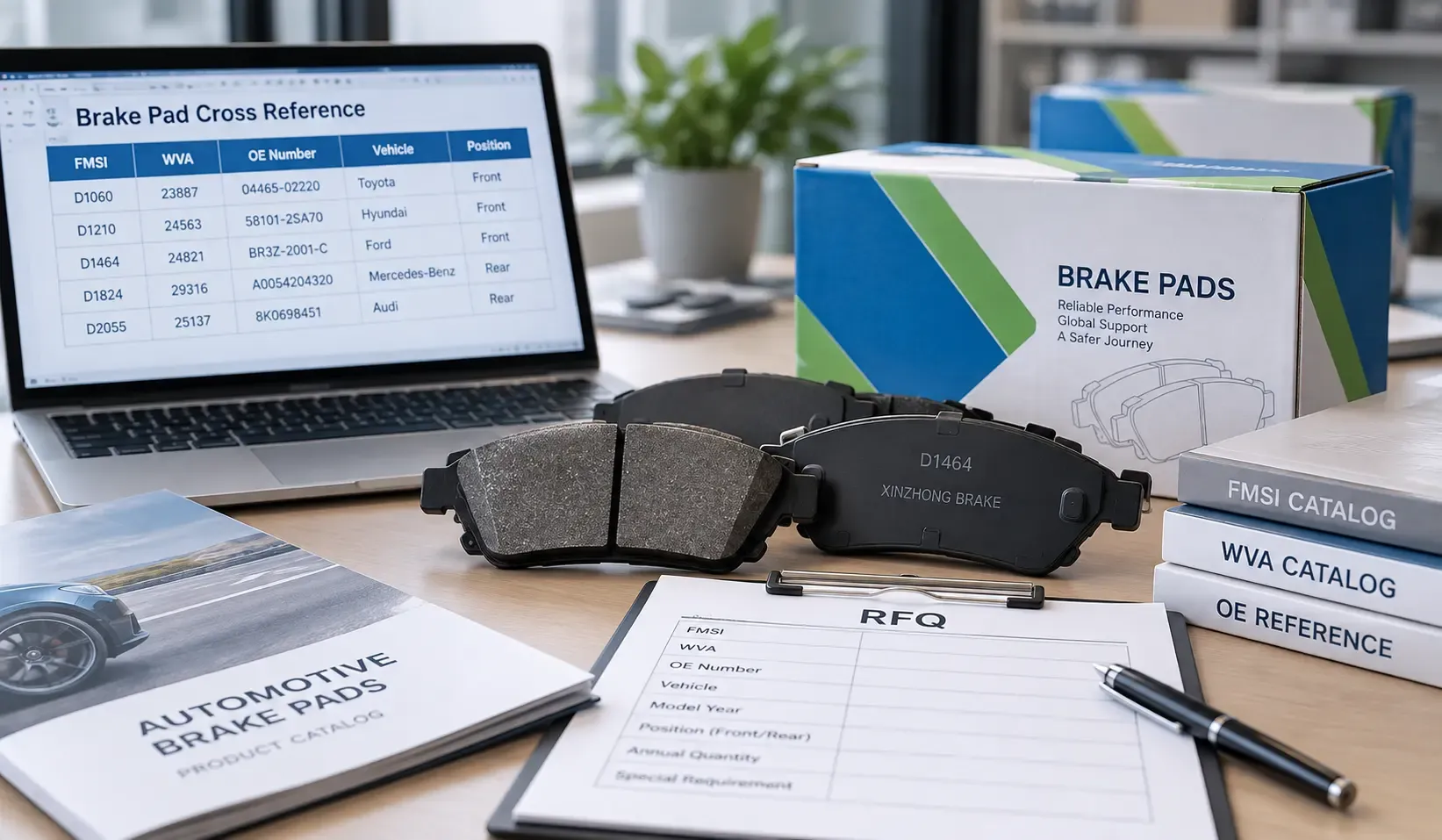
- FMSI, WVA or OE reference information
- Vehicle application information
- Barcodes or QR codes
- Country of origin markings
- Installation or product information
- Inner protective packaging
- Master cartons and shipping marks
The exact requirements depend on the destination market, distribution system and the buyer's existing brand standards.
For this reason, packaging requirements should ideally be discussed together with the product list rather than after the brake pads have already entered production.
1. Prepare Your Brand Logo and Packaging Artwork
If you already operate an aftermarket brand, provide the manufacturer with your existing packaging design and logo files.
Vector files such as AI, EPS or editable PDF are generally preferable because they allow the artwork to be adjusted without losing image quality.
If you do not yet have finished packaging artwork, the first step is to define the basic information that needs to appear on the box.
This may include:
Brand information: logo, brand name, website and contact details.
Product information: brake pad reference, application, axle position and relevant cross-reference numbers.
Market information: barcode, country of origin and other information required by the destination market.
Before printing, buyers should carefully review the final artwork proof.
A small error repeated across thousands of boxes becomes an expensive error.
2. Decide How Different Brake Pad References Will Be Identified
This is one of the most important decisions for distributors carrying many brake pad references.
A brake pad range may contain hundreds or even thousands of applications. Printing a completely different box for every reference is not always economical.
One practical solution is to use a standardized branded box combined with a reference-specific product label.
The box maintains consistent branding, while the label identifies information such as:
Information | Example |
|---|---|
Product Code | Buyer-defined SKU |
FMSI | Dxxxx |
WVA | Market-specific reference |
OE Number | Relevant OE cross reference |
Application | Vehicle make/model |
Position | Front / Rear |
Barcode | EAN / UPC / buyer system |
This approach can make packaging inventory easier to manage, particularly when an order contains many references with relatively small quantities per reference.
3. Confirm Barcode Requirements Before Production
Do not treat the barcode as something that can simply be added at the end.
Different distributors use different inventory systems.
A buyer may require:
- EAN-13
- UPC
- Internal SKU barcode
- QR code
- Customer-specific warehouse code
If you already have a barcode database, send it together with the order list.
The manufacturer should match each barcode to the correct brake pad reference before labels or boxes are printed.
For large multi-reference orders, this matching process deserves particular attention because one incorrect label can create receiving, warehouse and after-sales problems later.
4. Discuss Packaging MOQ Early
Custom packaging usually has its own MOQ.
This does not necessarily mean that every brake pad reference must meet the same packaging MOQ.
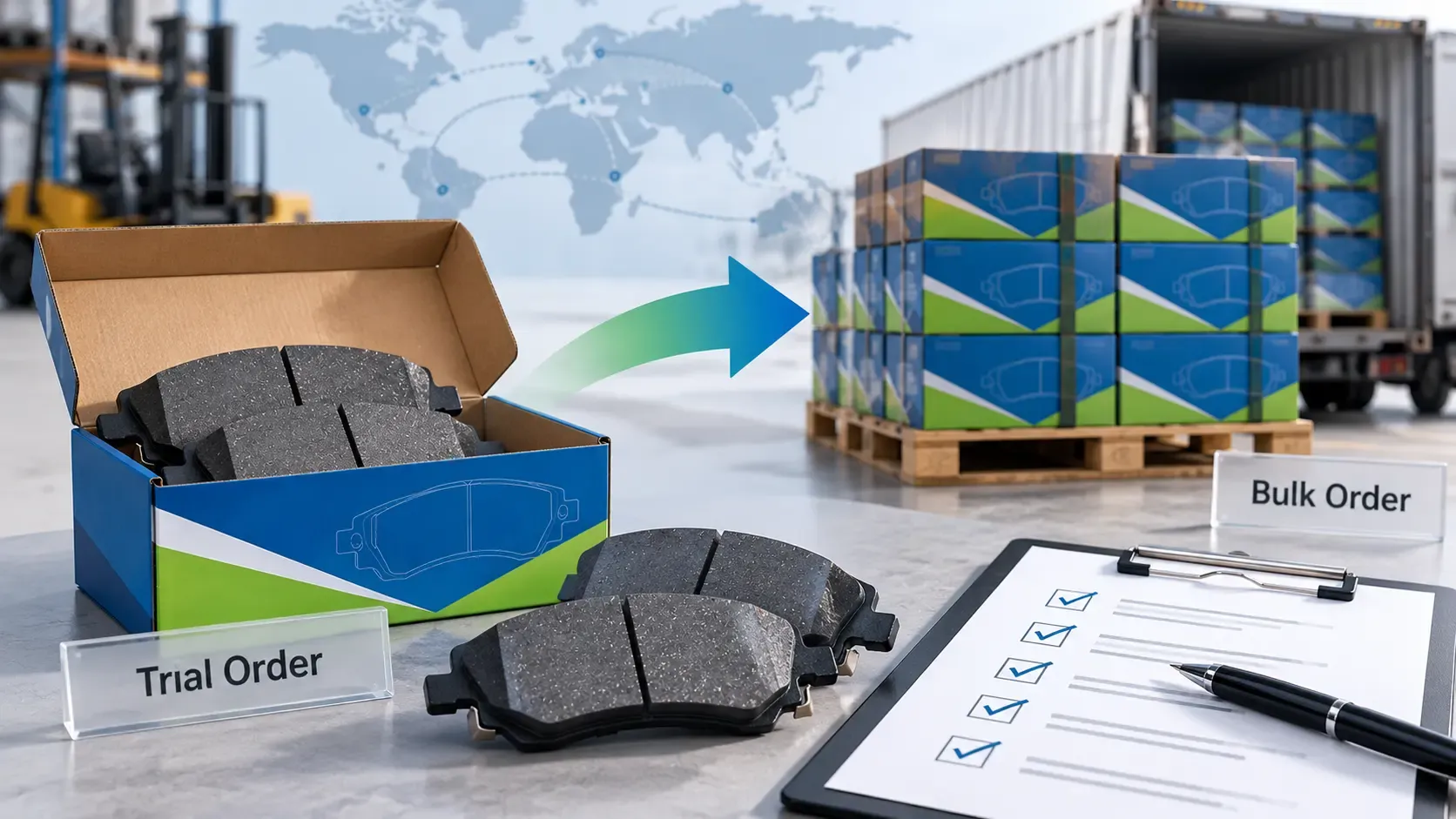
For example, a distributor may order many references but only a relatively small quantity of each reference.
In this situation, standardized packaging plus reference-specific labels may be more practical than printing unique boxes for every SKU.
The best packaging solution therefore depends on several factors:
- Number of brake pad references
- Quantity per reference
- Total order volume
- Packaging design
- Printing method
- Destination market
When requesting a quotation, send the manufacturer your complete reference list whenever possible.
This allows the supplier to evaluate the project as a complete private label program rather than treating every brake pad reference as an isolated order.
5. Make Sure Packaging Protects the Product
Brand appearance matters, but protection comes first.
Brake pads are relatively heavy products, and poorly designed packaging can be damaged during international transportation.
Packaging should be selected with actual logistics conditions in mind.
Important considerations include box strength, internal protection, carton loading and pallet stability.
For export orders, the outer carton and pallet configuration should also be discussed before shipment.
A beautiful retail box that arrives crushed at the distributor's warehouse has failed its most basic job.
6. Check Product and Packaging Information Before Mass Production
Before mass production, both sides should confirm the final packaging information.
A simple approval process can prevent many avoidable mistakes.
Buyers should check:
Artwork: Is the logo, color and layout correct?
Reference: Does the label match the correct brake pad?
Application: Is the vehicle information correct?
Barcode: Does it correspond to the buyer's database?
Quantity: Is the correct packaging quantity prepared for each reference?
Shipping mark: Does the master carton information meet warehouse requirements?
For larger projects, approving a packaging sample or final digital proof before full production is strongly recommended.
7. Think About Packaging as Part of the Supply Chain
Private label packaging should not be considered separately from sourcing.
For distributors, the real question is not simply:
"Can you print my logo?"
The better question is:
"Can you manage my brand consistently across a growing range of brake pad references?"
As the number of SKUs increases, packaging management becomes part of inventory management.
A manufacturer that understands multi-reference orders can help reduce packaging complexity and make future repeat orders easier to manage.
What Should You Send to a Brake Pad Manufacturer?
If you are preparing a private label project, you do not need to have everything finalized before contacting a supplier.
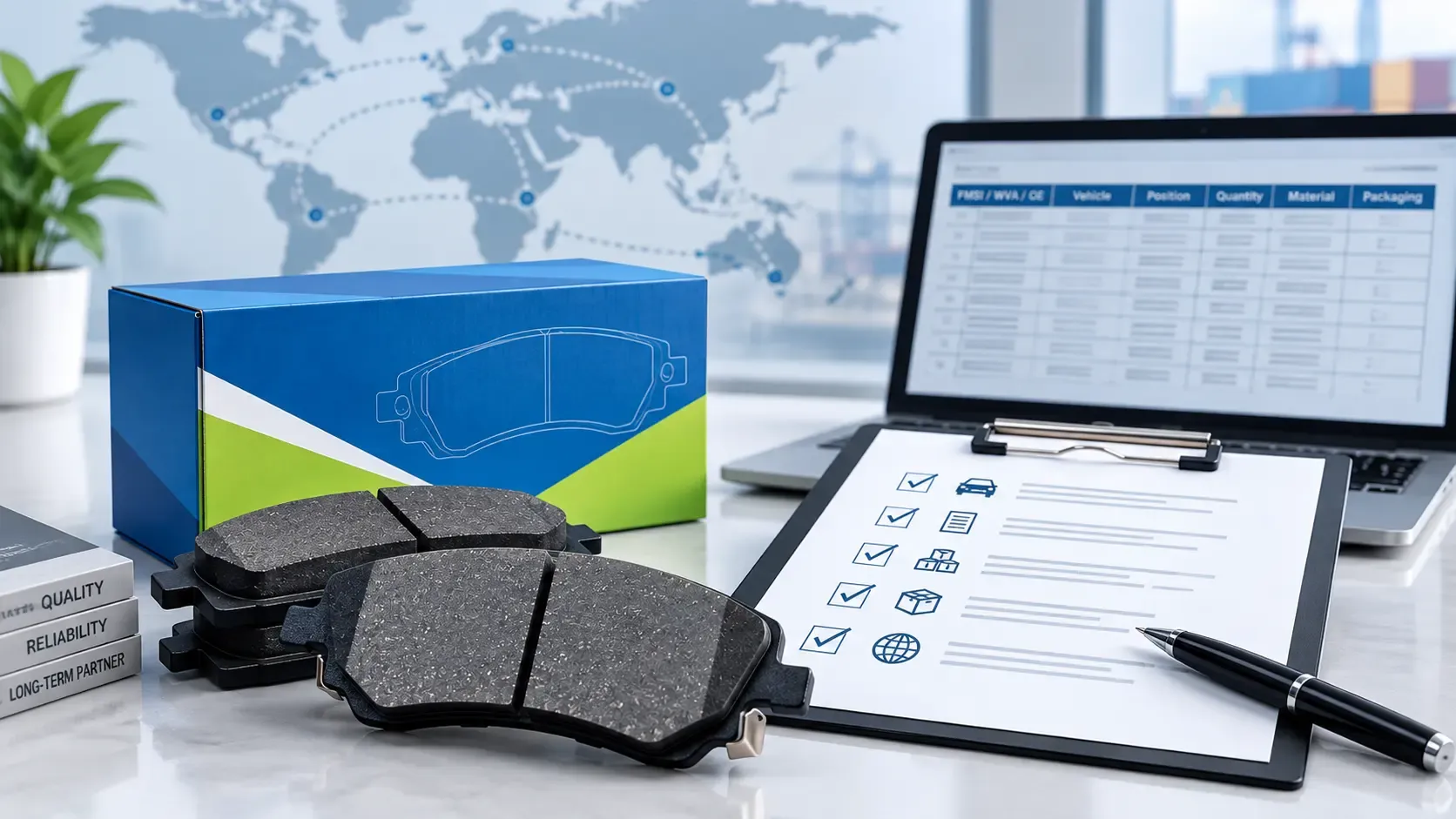
A useful starting package normally includes:
- Your brake pad reference list, preferably with FMSI, WVA or OE numbers
- Expected quantity per reference
- Brand logo
- Existing packaging artwork, if available
- Barcode requirements
- Destination market
- Any special labeling or carton requirements
With this information, the manufacturer can evaluate product availability, packaging options, MOQ and production requirements more efficiently.
Private Label Brake Pad Manufacturing with Xinzhong Brake
Xinzhong Brake supports OEM and private label brake pad programs for distributors, importers and aftermarket brands.
Our brake pad range covers more than 6,600 references, supported by 200+ friction formulations for different vehicle applications and market requirements.
Private label projects can include customized packaging, product labeling and formulation selection according to the buyer's sourcing program.
For buyers developing a new brake pad brand or expanding an existing product range, we can review your application list first and help determine suitable products and packaging options.
Send us your FMSI, WVA, OE or application list for review and quotation.
FAQ
Can I put my own brand on brake pad packaging?
Yes. Private label brake pad programs can use buyer-specific branding, packaging artwork and product labels, subject to the agreed packaging specifications and order requirements.
Do I need a different box for every brake pad reference?
Not necessarily. For multi-reference orders, a standardized branded box combined with reference-specific labels can sometimes be a more practical solution.
Can different brake pad references be combined in one private label order?
Yes, depending on product availability, quantity and manufacturing requirements. Buyers should provide the complete reference list so the supplier can evaluate the order as a whole.
What information should appear on a brake pad label?
Common information includes product code, FMSI/WVA/OE reference, vehicle application, axle position, barcode and other market-specific information.
Can I send my existing brake pad packaging design?
Yes. Existing artwork can be reviewed and adapted to the selected brake pad references and packaging specifications.
Conclusion
Good private label brake pad packaging does more than make a product look professional.
It helps distributors identify references correctly, manage inventory, protect products during transportation and maintain consistent branding across a large product range.
Before placing an order, confirm the artwork, reference system, barcode requirements, packaging MOQ and shipping configuration with your manufacturer.
The earlier these details are discussed, the easier it is to scale a private label brake pad program.